
Safe HF sampling systems in alkylation units (HFAU)

In refineries, hydrofluoric acid (HF) plays a central role as a catalyst in alkylation units (HFAU). Due to its extreme toxicity and corrosiveness, handling HF requires constant vigilance and rigorous protocols. To control the process accurately, reliable acid sampling is essential. It allows real-time monitoring of key parameters such as HF concentration, residual moisture and soluble oil content.
Implementing a secure sampling programme is much more than a formality. It is a lever for optimising alkylation efficiency, ensuring consistent product quality and controlling catalyst consumption. It also directly contributes to protecting equipment from corrosion and enhancing overall plant safety, in line with industry recommendations, notably API 751. At BIAR SA, we develop closed, robust and proven sampling systems designed to meet the specific and demanding requirements of HF units.

Why is HF sampling in an alkylation unit a critical operation?

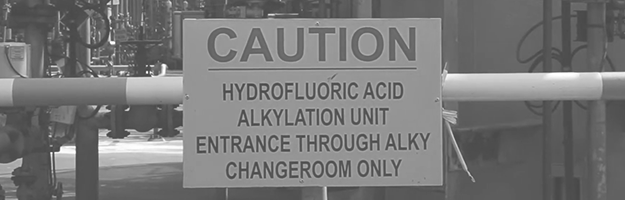
In refinery alkylation units, sampling hydrofluoric acid (HF) is a real operational challenge. All facilities are designed to operate in strict containment, with no leaks tolerated. However, taking a sample necessarily involves creating a controlled opening in this closed system, and analyzing fluids containing HF poses significant risks.

Lethal toxicity

Contact with hydrofluoric acid can cause severe, even fatal, skin burns. Inhaling its vapours is also extremely dangerous and can cause pulmonary oedema.

Extreme corrosivity and industrial risks (fire/explosion)

HF is extremely corrosive for operators and installations; combined with pressurized flammable hydrocarbons, it exposes installations to major risks of leaks and explosions.

Compliance with API RP751 standards

Alkylation units using hydrofluoric acid (HF) must comply with particularly stringent standards in terms of design, choice of materials and safety equipment. These requirements, which are essential to guarantee the safety of installations, are defined in the API reference document, RP 751.

Environmental impacts and regulatory consequences

Any leak, however minor, can trigger emergency plans, mandatory notifications and regulatory and financial penalties.

Where is hydrofluoric acid (HF) sampled within an alkylation unit (HFU)?

In refineries, HF samples are taken at several strategic locations within the alkylation unit (HFU) to monitor the process. These include the catalyst loop, the acid regeneration section, storage areas, transfer lines, and quality monitoring. These samples are used to measure key parameters such as concentration, water content, and the presence of acid-soluble oil (ASO). They are taken under specific operating conditions—pressure, temperature—and in strict compliance with safety protocols, which are particularly rigorous in this context.

Which sampling system should be used for sampling HF in an alkylation unit?

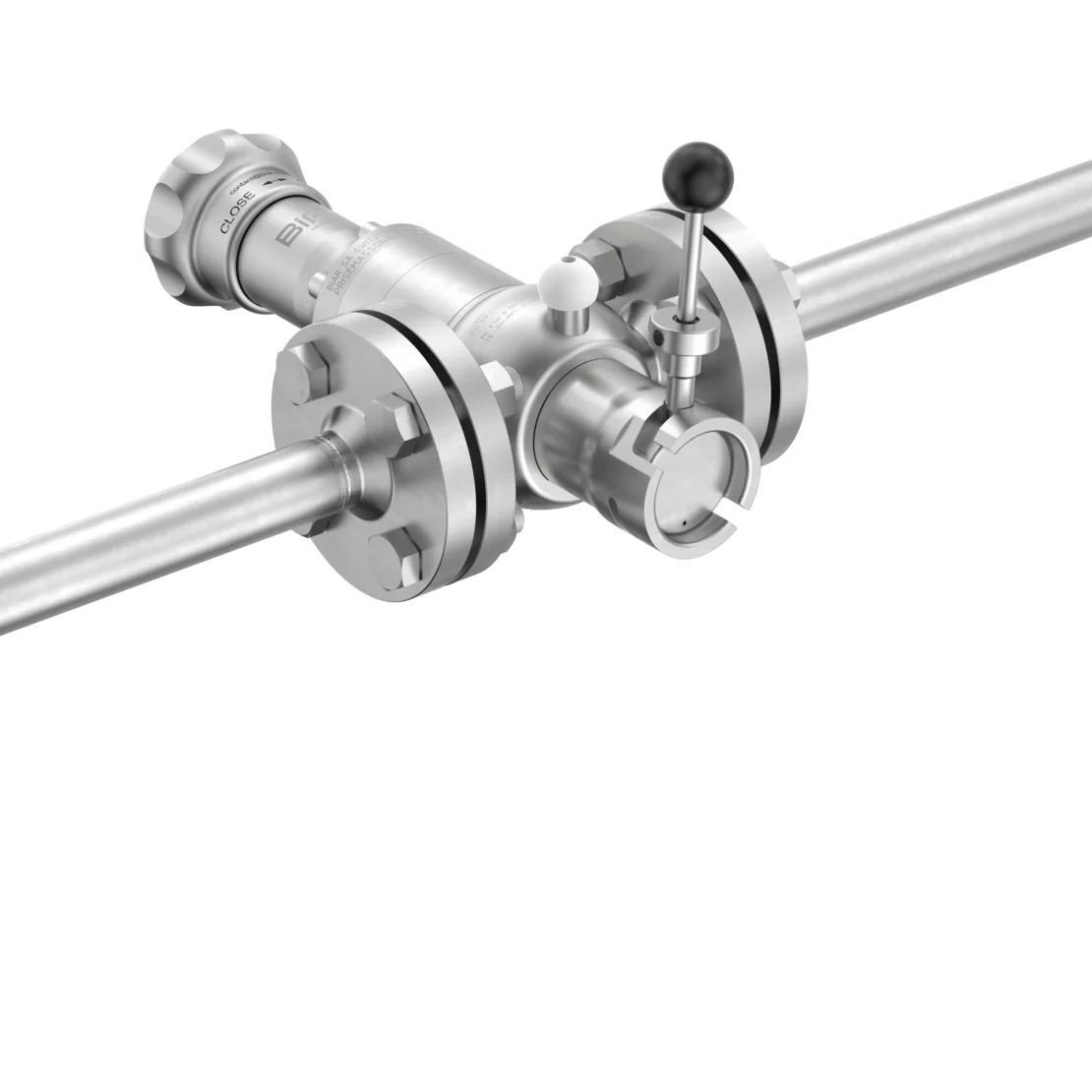
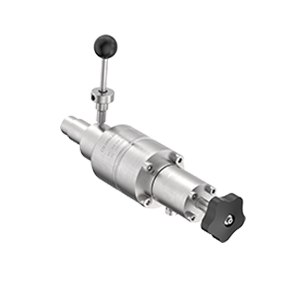
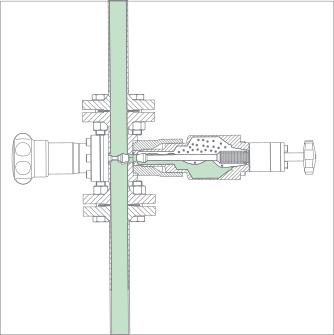
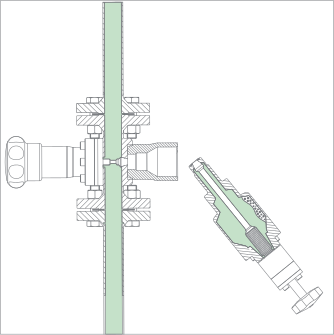
The API RP 751 standard is clear: hydrogen fluoride (HF) sampling installations must be designed as closed, purgeable systems with double insulation. The aim is to incorporate safety into the design to minimise operator exposure. This is precisely the principle behind BIAR sampling solutions. They combine a Monel or Hastelloy bellows valve – with its self-closing actuator and leak detection device – with a sampling container that also features bellows. A technical solution that perfectly meets the most stringent safety requirements.

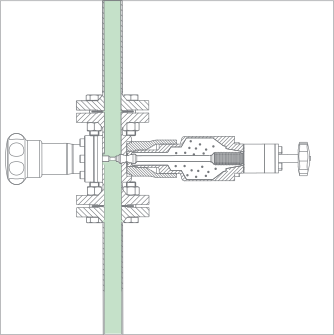
8 PTFE stuffing box for secondary containmentPTFE-Stopfbuchse für sekundäre AbdichtungPTFE stuffing box for secondary containment 8 7 Bellows seal Hastelloy® C276Faltenbalg in Hastelloy® C276Bellows seal in Hastelloy® C276 7 6 Conical seat on both valve and container with PTFE gasketKonische Sitze an Ventil und Behälter mit PTFE-DichtungConical seat on both valve and container with PTFE gasket 6 5 Adapter with robust bayonet connectionAdapter mit robustem BajonettanschlussAdapter with robust bayonet connection 5 4 Valve body in Monel® 400Ventilkörper aus Monel® 400 Valve body in Monel® 400 4 3 Bellows seal Hastelloy® C276Faltenbalg in Hastelloy® C276Bellows seal in Hastelloy® C276 3 2 PTFE stuffing box for secondary containmentPTFE-Stopfbuchse für sekundäre AbdichtungPTFE stuffing box for secondary containment 2 1 Spring-to-close hand wheel "Magic wheelHandrad automatisch Federschliessend "Magischer Drehknopf" Spring-to-close handwheel "Magic wheel 1

What features are essential for a safe HF sampling system in alkylation units?

HF sampling in alkylation units (HFU) requires equipment specifically designed for highly toxic and corrosive products. A safe sampling system relies on a combination of robust mechanical design, HF-compatible materials and active safety features, to eliminate exposure risks, prevent leakage and guarantee the integrity of operators and samples


Bellows-type sampling valves


BIAR sampling valves ensure maximum process containment, even during the most critical operations.

  • High-strength alloy bodies ( Monel®, Hastelloy®,)
  • Bellows construction in Hastelloy
  • PTFE seat seal
  • Leak detection device for continuous leak testing


Dead-man's safety actuator

Sampling valves for HF and AHF are equipped with a "dead man" type safety actuator that closes automatically, making the sampling operation safer.
They offer the following advantages in particular:

  • Automatic and immediate closure as soon as the operator releases the actuator
  • Reinforced safety by locking, preventing unauthorized manipulation
  • Handwheel can be PFA-coated for thermal insulation and corrosion protection
  • IP66 certification, guaranteeing complete protection for reliable outdoor use

Alloy containers


Accessories designed for safe, non-contact sampling from the production line to the laboratory:

  • alloy containers with bellows for confined transfer and on-site neutralization
  • alloy or PFA syringes for vacuum sampling and controlled reinjection
  • polypropylene (PP) safety cabinet for bottle handling and closure closed cabinet without operator exposure
  • other accessories available for lower-concentration HF applications


What are the safest solutions for sampling HF in alkylation units?

In HF alkylation units, sampling safety cannot be limited to the sampling point alone. It relies on a continuous and coherent chain, covering all stages: extraction of the fluid from the process, transfer into a dedicated container, safe transport to the laboratory, then analysis under confinement. At each stage, the aim is the same: to avoid operator exposure, HF emissions and open handling, in accordance with the principles of API RP 751. The safest solutions are based on fully enclosed sampling systems, designed to function as an extension of the industrial process, with HF-compatible materials, fail-safe devices and purging and rinsing capabilities. This approach makes it possible to control the risks associated with HF toxicity, flash phenomena, trapped acid residues and successive manipulations between the field and the laboratory

In-line valve

MLB-SO in Monel® 400

features

-hastelloy® C276 bellows

-conical seat seal
pTFE needle seal

-secondary sealing
pTFE gland

-bayonet adapter
in Hastelloy® C276
with flush option

-valve safety plug
in Monel® 400 and PTFE


Container

Columbia LY-SO in Monel® 400

features

-hastelloy® C276 bellows

-conical seat
with PTFE needle seal

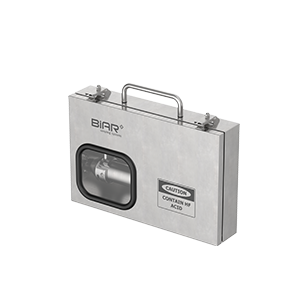
Carrying case

For LY-SO container

specifications

-material 1.4404 / 316L

-suitable for
25-50-100 ml containers

Laboratory support

for the LY container

specifications

-hastelloy® C276/FFKM material

-version with
nitrogen flush available


How to sample HF with the Columbia LY container

To ensure safe, representative sampling of hydrofluoric acid (HF), correct installation of the Columbia LY-SO container is essential. We recommend positioning the sampling valve on a vertical pipe, or at 90° degrees on a horizontal pipe.

This configuration offers several advantages:

  • Optimum management of expansion: The free space provided in the container absorbs any expansion, thus avoiding any potentially dangerous increase in pressure.
  • Enhanced safety: By minimizing the risk of overpressure, this configuration contributes to the overall safety of the sampling process.
  • Accurate sampling: Correct positioning of the valve ensures accurate, representative sampling, essential for HF analysis
  • BIAR - Columbia LY sampling containers are the first in the industry to be available with bellows.
Container connection

Installation of the LY-SO container under the valve.

Sampling

Opening the container and valve

HF sample recovery

Container removal after valve + container closure

HF sampling with a COLUMBIA LY

Contactless, secure sampling directly from the pipe

LY-SO container operation

Safety and sealing principle for COLUMBIA LY container with bellows


Increased safety through interface flushing

To enhance safety and industrial hygiene, an adapter with flush connection is also available. The RX-R model cleans the gap between the valve and the container, eliminating any residue and guaranteeing safe, representative HF sampling.

How to analyze hydrogen fluoride (HF) safely in the laboratory?

Laboratory analysis of hydrogen fluoride (HF) focuses on moisture content and HF purity. Moisture content is generally determined by Karl Fischer coulometry, while HF purity is measured by acid-base titration. These operations are carried out in a fume hood, in fully contained systems.

Need to secure your HF sampling points in your alkylation unit?

Don't compromise on safety. Our experts will work with you to define the best solution for your refinery. Request a technical consultation.

captcha

Sampling solutions where safety is critical.

Industrial sampling systems designed for high-risk processes involving toxic, corrosive products or extreme conditions.


HF / AHF sampling


It is a matter of control. By taking samples, we can check the ‘strength’ of the acid, its water content and the amount of ASO (acid-soluble oil) that accumulates. These parameters are crucial: they provide information on the stability of the process, the final quality of the alkylate and, above all, they help to control risks.

This operation involves several major hazards: the extreme toxicity of HF, its corrosive power, its invisible vapours, the presence of flammable hydrocarbons, not to mention pressure variations. The main risk remains operator exposure, which can occur due to a leak, mishandling or a seal failure.

In practice, the purity (or ‘strength’) of the acid, the water content (H₂O) and the ASO level are closely monitored. Depending on the site, other indicators related to acid carryover to the fractionation section may also be analysed, which can signal corrosion problems or discrepancies in the acid balance.

API RP 751 is primarily a best practice guideline that is widely recognised for safety in HF units, including sampling. It is not legally mandatory in itself, but it may become so if a site incorporates it into its own procedures, if it is stipulated in a contract, or if an authority or insurer requires it as a reference.

The API emphasises several key points: having specific written procedures for sampling, training all personnel (operational and laboratory) who handle samples containing HF, and above all, systematically incorporating sampling into risk analyses (such as HAZOP), considering both normal conditions and disturbed situations.

The most sensitive points are generally located on the HF Acid Fast Loop, at the settler and the circuits leading to the rerun or fractionation section. These locations allow for the collection of a truly representative sample of the catalyst acid. They are also designed with safety features (such as butane purges or flares) to limit exposure and make sampling more reliable.

The key is to use a closed sampling system. This involves: A) a valve specifically adapted to HF, B) a secure container and accessories (sometimes with a double chamber for dilution or neutralisation), C) leak detection systems, regular inspections and, most importantly, fully trained and equipped personnel.

It's quite logical: the fewer steps, connections and complex manipulations there are, the less room there is for human error. A simple, intuitive and standardised system improves the repeatability of operations and significantly reduces operational risk.

Absolutely. Corrosion modelling studies show that there are critical transition zones. Small variations in temperature, pressure, and especially acid entrainment can tip the system into much more aggressive conditions. For example, the formation of water-rich acid droplets can significantly accelerate corrosion.