
Safe sampling systems for hydrofluoric acid (HF) and anhydrous hydrogen fluoride (AHF)

Sampling hydrogen fluoride (HF) , whether in aqueous or anhydrous form (AHF) , is undoubtedly one of the most delicate stages in an industrial process. The challenge is considerable: it involves intervening on a process line in service, momentarily breaking the containment of the pipe.
Given the extreme danger of these products, which are both toxic and corrosive, there is only one viable approach: a closed sampling system that is robust and intuitive. This is essential to ensure the safety of teams, rigorous process control and the integrity of samples. At BIAR SA, we design and manufacture precisely this type of solution, systematically aligning ourselves with the most demanding industrial standards and HSE requirements.


Why is HF and AHF sampling a critical operation?

When hydrofluoric acid or anhydrous hydrogen fluoride is sampled, the process moves from a confined state to direct interaction with the outside environment. This operation involves major risks.

Lethal toxicity

Hydrofluoric acid and hydrofluoric acid anhydride (AHF) penetrate tissue and bind to calcium in the body, which can lead to cardiac arrest. Their vapours, often invisible to the naked eye, make this hazard particularly difficult to identify without specific equipment.

Extreme corrosivity in both HF and AHF applications

Hydrofluoric acid, whether diluted or anhydrous, is extremely corrosive. It attacks most metals, glass, and a multitude of other materials. With unsuitable components, sampling valves deteriorate at an alarming rate, leading to leaks with dramatic consequences.

Compliance with stringent standards

Handling hydrofluoric acid (HF) and its anhydrous form (AHF) presents major risks. For this reason, sampling procedures are subject to extremely rigorous international standards. The design and manufacture of any sampling system must use materials that comply with these specifications.

Environmental impacts and regulatory consequences

A hydrofluoric acid (HF) leak at an industrial site is a critical event. In addition to the obvious operational risks, such an incident can have serious regulatory and financial consequences for the company. This is precisely the type of situation that professionals in the sector strive to prevent by all means possible.


In which industrial sectors are hydrofluoric acid (HF) and anhydrous hydrofluoric acid (AHF) sampled?

Obtained by reacting fluorine with sulphuric acid, hydrogen fluoride (HF) is an essential raw material for many commercial and industrial products. Its main use is in the production of fluorocarbons. It is also found in sectors as varied as electronics, metallurgy, the oil industry (refining), synthetic chemistry and the manufacture of silicon polysulphides.


Nuclear – Uranium Conversion Nuclear – Uranium Conversion High-purity sampling for uranium conversion. Corrosion-resistant equipment for safely handling AHF during the critical oxide-to-hexafluoride transformation.Hochreine Probenahme für die Urankonversion. Korrosionsbeständige Ausrüstung zur sicheren Handhabung von AHF während der Umwandlung von Oxiden zu Hexafluoriden.Échantillonnage haute pureté pour la conversion d'uranium. Équipement anticorrosion pour manipuler l'AHF durant la transformation oxyde-hexafluorure. Semiconductors (Electronics) Semiconductors (Electronics) Focus: Wafer cleaning, etching, and ultra-high purity.Contamination-free sampling for wafer cleaning and silicon etching. PFA-lined solutions ensuring ultra-high purity for electronic manufacturing.Kontaminationsfreie Probenahme für Wafer-Reinigung. PFA-ausgekleidete Lösungen garantieren ultrahohe Reinheit für die Elektronikfertigung.Prélèvement sans contamination pour le nettoyage des wafers. Solutions revêtues PFA garantissant une ultra-haute pureté pour l'industrie électronique. HF–AHF Production Plant HF–AHF Production Plant Focus: Production purity and initial safety.Secure sampling of anhydrous (AHF) or aqueous HF during production. Ensure maximum purity and operator safety with our closed-loop systems. Sichere Probenahme von wasserfreiem oder wässrigem HF. Gewährleisten Sie maximale Reinheit und Arbeitssicherheit mit unseren geschlossenen Systemen.Échantillonnage sécurisé de l'HF anhydre ou aqueux en production. Garantissez pureté maximale et sécurité opérateur avec nos systèmes fermés. Refinery with Alkylation Unit (HFU) Focus: API 751 compliance with optimal catalyst activity, corrosion preventionRobust, corrosion-resistant solutions (valves & containers) fully compliant with API 751 standards for maximum safety.Solutions robustes et résistantes à anticorrosion, conformes à la norme API 751 pour une sécurité totale.Robuste, korrosionsbeständige Ventile, vollständig konform mit API 751 für maximale Sicherheit.opérateur avec nos systèmes fermés. Refinery with Alkylation Unit (HFU) Chemical Plant Chemical Plant Focus: Fluorocarbons, refrigerants, and synthesis stages Control HF concentration in fluoropolymer and chemical production. Safe sampling solutions for toxic synthesis and fluorination stages.Kontrolle der HF-Konzentration in der Chemikalienproduktion. Sichere Probenahmelösungen für toxische Synthese- und Fluorierungsphasen.Contrôle de la concentration d'HF dans la production chimique. Solutions sûres pour les étapes de synthèse et de fluoration toxiques. Metal & Aluminum processing Metal & Aluminum processing Focus: Pickling, etching, and varying concentrations. Reliable sampling for metal pickling and aluminum etching. Monitor acid strength and impurities safely, from low to high concentrations. Zuverlässige Probenahme für Metallbeizen und Aluminiumätzung. Überwachen Sie Säurestärke und Verunreinigungen sicher, von niedrigen bis hohen Konzentrationen. Échantillonnage fiable pour le décapage métal et l'aluminium. Surveillez l'acidité et les impuretés en toute sécurité, quelle que soit la concentration.

Which sampling system should be used for hydrofluoric acid (HF) and anhydrous hydrofluoric acid (AHF) in demanding industrial environments?

When sampling these products, the chosen solution must above all guarantee absolute safety, total containment and ease of use, without ever compromising reliability. BIAR SA sampling systems, including their valves and accessories, meet these requirements precisely. They enable perfectly controlled sampling, eliminating any risk of exposure for operators and any emissions into the environment, while ensuring that each sample is representative. Designed to withstand the most severe industrial conditions, these systems combine robustness and performance.

PTFE or PFA seals, depending on the valve body material, and can incorporate a leak detection system.

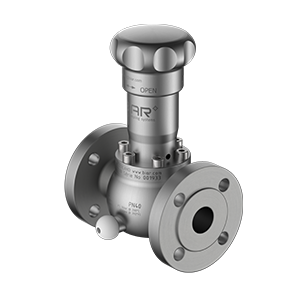
Robust, proven design, with bodies available in alloy (Monel® or Hastelloy®) or PFA-coated construction

“Magic handwheel” drive - dead-man's actuator type ensuring optimum safety: as soon as the operator releases the control, the system closes automatically.

The MLB-SO valve and the Columbia LY container comply with HFIPI, Eurofluor and API 751 standards.

  • 1
  • 2
  • 3
  • 4

What are the essential components of a secure sampling system for collecting HF or AHF?

Sampling chemicals as hazardous as hydrogen fluoride or anhydrous hydrofluoric acid cannot be done with ordinary equipment. It requires a rigorous approach, combining appropriate mechanical design, carefully selected materials and active safety devices. The objective is clear: eliminate any risk of exposure, prevent even the slightest leak, and guarantee both operator safety and sample representativeness.


Bellows-type sampling valves


BIAR sampling valves have been designed to provide optimal process containment, even during the most demanding sampling phases. Their robust, dead-space-free design, proven in the field, ensures long-term safety and unfailing reliability, thanks in particular to:

  • High-performance alloy (Hastelloy®, Monel®) or PFA-coated steel body
     
  • Bellows construction for both alloy and coated models
     
  • Seat sealing guaranteed by PTFE on alloy valves or PFA on coated versions
     
  • Integrated leak detection device for continuous leak monitoring


Dead-man's safety actuator
 

The sampling valves for HF and AHF incorporate a dead man's switch safety actuator, which closes automatically to secure each sample. Their design offers several practical advantages:

  • Automatic and immediate closure as soon as the operator releases the control.
     
  • Optional lock to enhance safety by preventing unauthorised tampering.
     
  • PFA coating available, offering both thermal insulation and excellent corrosion resistance.
     
  • Accurate sampling
     
  • Actuators are IP66 certified and therefore perfectly suited for outdoor use.


High-security sampling accessories


Our range of accessories is designed for contactless HF and AHF sampling, ensuring safety throughout the entire process, from the production line to the analysis laboratory.

  • Columbia LY alloy containers, equipped with a bellows; available in several sizes and configurations, including a double-chamber model with integrated neutralisation.
     
  • Alloy or PFA syringes, ideal for vacuum sampling or reinjection with precise control.
     
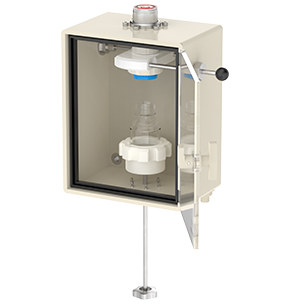
  • Polypropylene (PP) safety cabinet, designed for handling and capping bottles with the cabinet closed, eliminating any risk of exposure to the operator.
     
  • Many other accessories, specially adapted for applications using lower concentrations of hydrofluoric acid (HF).


How can HF/AHF samples be safely collected from the production line?

BIAR offers a complete range of closed sampling systems designed specifically for hydrofluoric acid, whether anhydrous or aqueous. These solutions can be adapted to the specific characteristics of your industrial process, the identified level of risk and the operational constraints of your site.


In-line sampling valves

Alloy valves with bellows (Hastelloy® / Monel®)

Alloy sampling valves constructed with bellows and PTFE seals for optimal mechanical strength.

PFA-lined sampling valves

Sampling valves with cast stainless steel bodies coated with PFA. All parts of the valve that come into contact with the product are made of PFA, ensuring complete corrosion resistance.


Safe sampling accessories for HF / AHF

Bellows containers in Hastelloy® or Monel® alloys

BIAR is the only supplier to offer sample containers equipped with a bellows made of Hastelloy® or Monel® alloys, and available in various configurations and sizes (double chamber, lined, etc.).

Sampling syringes

Alloy or PFA-coated sampling syringes, 50 to 250 ml, compatible with BIAR multifunction valves.

Polypropylene safety cabinet with bottle stopper closed cabinet

The Revo RAP polypropylene (PP) safety cabinet allows the bottle to be capped when the cabinet is closed.

How to analyze hydrogen fluoride (HF) safely in the laboratory?

Analysing hydrogen fluoride (HF) in the laboratory is no trivial task. To work safely, it is essential to follow a strict protocol. This involves wearing appropriate protective equipment, such as special gloves and goggles, and handling the substance with extreme care. The aim is twofold: to protect oneself from risk, but also to ensure that the samples are not altered and that the results obtained are completely reliable.

Would you like to enhance the safety of your HF or AHF sampling points?

Safety should never be an option. Our specialists are here to guide you and offer you the technical solution best suited to your process. Please do not hesitate to request a personalised technical consultation.

captcha

Where safety is paramount, our sampling solutions make the difference.

BIAR design sampling industrial systems specifically for high-risk environments, whether handling toxic products, corrosive substances or operating in extreme conditions.


HF alkylation


Frequently asked questions : BIAR expertise for hydrofluoric acid sampling

Hydrofluoric acid (HF) refers to an aqueous solution of hydrogen fluoride, while AHF (Anhydrous Hydrogen Fluoride) is the pure, anhydrous form. AHF is more unstable, usually handled under pressure, and requires extra precautions for sampling.

They are closely related, but are not always identical in practice. HF is the chemical formula of the hydrogen fluoride molecule. However, the term "hydrofluoric acid" generally refers to hydrogen fluoride dissolved in water (aqueous HF). This can lead to confusion, as in some databases, the CAS/SciFinder nomenclature may refer to the HF molecule as "hydrofluoric acid", even when it is not an aqueous solution.

These are terms frequently used to describe HF solutions and their quality level. wt% (weight percentage) is the most common format for industrial HF. It indicates the quantity of HF by mass in the solution. Example: HF 49 wt% means 49 g of HF per 100 g of solution (the remainder being mainly water). w/v% (mass/volume percentage) indicates the quantity of HF by mass per volume of solution. Example: HF 10 w/v% means 10 g HF per 100 mL solution.

Concentration indicates how much HF is present in the mixture (its "strength"), e.g. 49 wt% or 70 wt%. Purity indicates the level of contamination (its "cleanliness"). Typical impurities may include water, dissolved metals, chlorides, sulfates and particulates. Thus, we can have a high-purity HF 49 wt% (very low impurity content) or a lower-purity HF 49 wt% (more contaminants). In short: concentration = strength, purity = cleanliness.

Both are possible, depending on process conditions and sampling objective. Hydrogen fluoride has a boiling point close to room temperature (~19.5°C): it can therefore be in liquid or gaseous form, depending on temperature and pressure. AHF (anhydrous hydrogen fluoride) is often handled and withdrawn as a liquefied gas/liquid under pressure in industrial plants. HF (aqueous hydrofluoric acid) is generally collected in liquid form, as it is HF dissolved in water.

Hydrogen fluoride (HF) sampling is one of the most critical points in an industrial process. It represents a major challenge, as it requires temporarily breaking the containment of a highly monitored process line.

These products are extremely toxic and corrosive. Simple exposure can cause deep burns, systemic damage or death. Sampling must be carried out using closed, certified, HF-resistant systems, according to strict protocols

BIAR solutions are also used in:A) oil refining (alkylation) |B) production of fluorochemicals and coolants |C) electronics industry (etching) |D) nuclear power (UF₆ conversion, zirconium pickling) |E) metallurgy (surface treatment, aluminum)

No. Solutions vary according to: A) acid concentration (5% to 99.9%) | B) production and sampling parameters (pressure / temperature / frequency)|C) safety requirements.

This depends on the concentration of the product to be sampled, the sampling parameters and the safety requirements of the site; BIAR offers double-chamber containers for neutralizing the sample before transport or analysis.

Anhydrous HF (AHF) is a highly volatile product, whose vapour pressure rises rapidly with temperature. Sampling in a container with ice helps to reduce product temperature, reduce evaporation and limit the release of toxic vapors during short-term handling. Cooling also helps to limit the thermal effects of any traces of moisture. This method can be used in certain contexts, but does not replace good sampling practices in closed systems.

Thanks to its modular range, BIAR offers solutions tailored to your constraints (pressure, temperature, toxicity, sampling frequency). Our experts will help you choose the safest, most accurate solution for your process.

HF-resistant materials such as Monel, Hastelloy C-276 and PFA are recommended, depending on concentration, temperature and process conditions

Alloy bellows-sealed leak-control valves combined with bellows-sealed alligator containers or PFA-coated valves with syringes or PFA-coated containers are perfectly suited to AHF sampling. These solutions enable closed, secure, contamination-free sampling.

Yes, BIAR sampling systems comply with the recommendations and guidelines of these organizations, guaranteeing maximum conformity.